

Why a Truck Driver’s Clock Matters After a Crash in Montgomery County
Key Takeaways: The federal 11-hour driving limit under 49 CFR § 395.3 generally allows a property-carrying commercial driver to drive no more than 11 hours after 10 consecutive hours off duty, within a 14-hour on-duty window that generally does not pause for breaks. When a trucker exceeds that cap before a Norristown crash, the violation can help transform a vague fatigue theory into a documented breach of a safety rule that may support a negligence claim. Proving it often depends on perishable evidence such as ELD data, dispatch records, fuel and toll receipts, GPS pings, and payroll incentives, which is why prompt preservation demands matter. A violation alone does not establish liability, because Pennsylvania law still requires proof of duty, breach, causation, and damages, and fatigue must be tied to the mechanism of the crash. Carriers commonly respond by invoking the short-haul exception, adverse driving conditions, the 30-minute break rule, or comparative fault, and each can often be tested against independent records. With a general two-year statute of limitations under 42 Pa.C.S. § 5524 and rapid-response teams often on scene within hours, acting early is frequently among the most controllable factors in a claim.
The federal 11-hour driving limit matters because it can convert a vague suspicion of fatigue into a documented, potentially provable breach of a safety rule. Under 49 CFR § 395.3, a property-carrying commercial driver generally may drive a maximum of 11 hours after 10 consecutive hours off duty, and only within a 14-hour on-duty window. When a trucker exceeds that limit before a collision on Ridge Pike, Germantown Pike, or the Route 202 corridor, the violation may become a central pillar of a Norristown semi-truck injury claim, supporting the breach element of a negligence case rather than leaving fatigue as speculation.
If a tractor-trailer crash has upended your family’s life, the timing of your response often shapes the evidence available later. The team at Solomon, Berschler, Campbell & Thomas – Norristown Lawyers helps injured people and grieving families across Montgomery County pursue accountability from carriers and their insurers. Call 610-279-4300 or contact us now to discuss what happened and what records may need to be preserved.
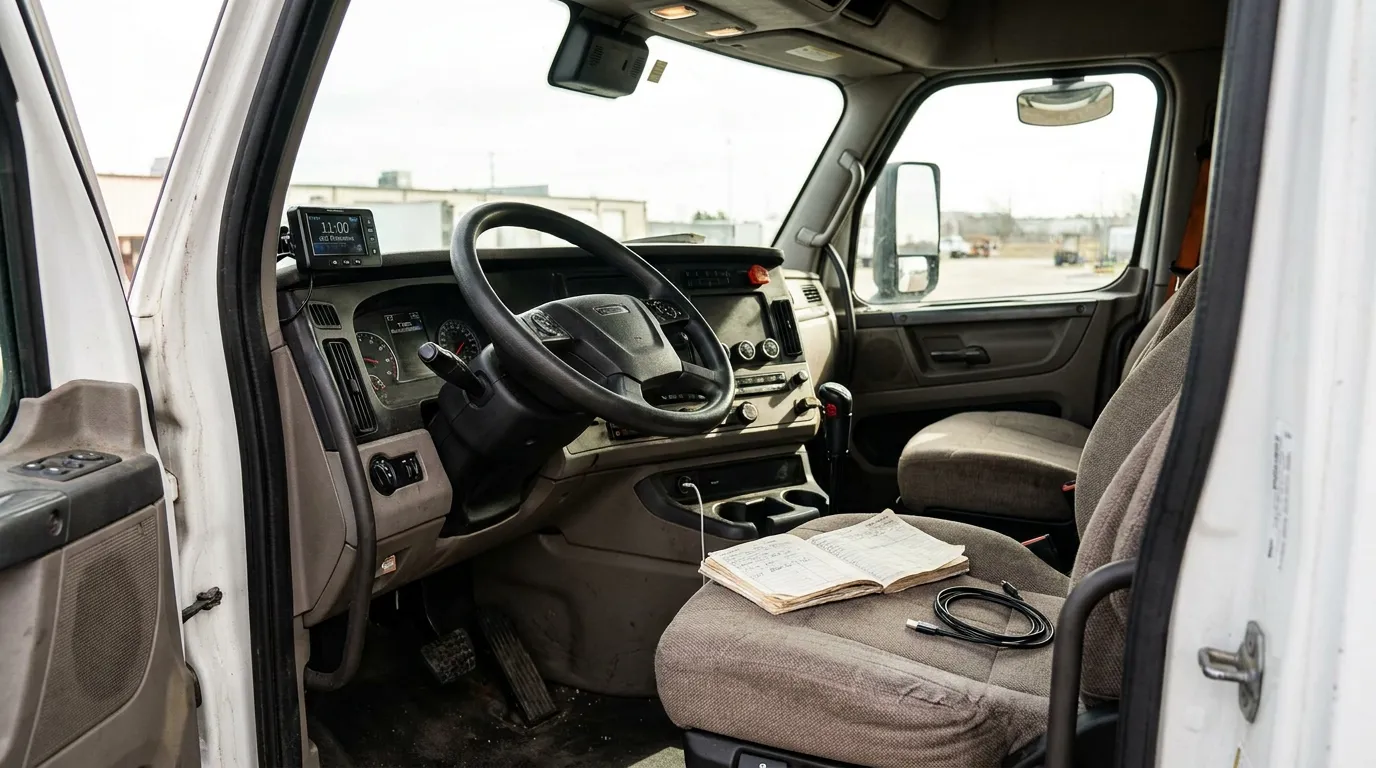
What the 11-Hour Rule Actually Requires
The default rule is straightforward, but the details often decide cases. Part 395 of the Federal Motor Carrier Safety Regulations sets maximum driving time, required rest breaks, and daily and weekly on-duty limits. The 11-hour cap under 49 CFR § 395.3 operates alongside the 14-hour window, meaning a driver may run out of legal driving time even if fewer than 11 hours were spent behind the wheel. Separate weekly limits under 49 CFR § 395.3(b) generally cap on-duty time at 60 hours in 7 consecutive days or 70 hours in 8 consecutive days, so a driver can be compliant on a given day and still be over the weekly limit.
Those limits do not exist in a vacuum. The 2020 modernization of the federal rules added flexibility without increasing total driving time. The U.S. Department of Transportation announced a final rule updating the hours of service safety regulations, changing several provisions carriers now routinely invoke in litigation. Which version applies generally depends on the date of the trip at issue.
Key Provisions That Frequently Surface in Litigation
| Provision | General Standard | Why It Matters to a Claim |
|---|---|---|
| Maximum driving time (§ 395.3) | Up to 11 hours after 10 consecutive hours off duty | Establishes the baseline the driver may have exceeded |
| On-duty window | 14 consecutive hours, generally not extended by off-duty breaks | Loading, inspections, and waiting time generally count |
| 30-minute break | Generally required after 8 cumulative hours of driving; may be satisfied off-duty, in sleeper berth, or on-duty, not-driving | Break records may corroborate or contradict a logbook |
| Adverse driving conditions | May extend maximum driving time and window by up to 2 hours when conditions were unforeseeable at dispatch | Weather and road conditions may become factual disputes |
| Short-haul exception (§ 395.1(e)(1)) | Expanded to 150 air-miles with a 14-hour duty period, subject to return-to-work and time-record conditions | May affect whether ELD use and full logging applied |
Each row represents a potential defense argument. Carriers often assert that an exception applied, that conditions justified extra time, or that the driver wasn’t required to keep standard records. Whether any position holds up depends on the specific route, dispatch records, and duty status entries.
Proving FMCSA Hours of Service Violations in a Pennsylvania Case
Documentary evidence generally carries more weight than a driver’s recollection. Part 395 also incorporates electronic logging device requirements, and ELD data recorded under 49 CFR §§ 395.8 and 395.22 is commonly sought in truck accident litigation to help establish duty status hour by hour. That data, cross-referenced against fuel receipts, toll records, weigh station stops, GPS pings, and delivery timestamps, may reveal whether the reported log matches reality.
This evidence is often perishable. Federal rules generally require carriers to retain records of duty status and supporting documents for six months, and telematics data not covered by that requirement can be overwritten in the ordinary course of business. A prompt spoliation letter and, where appropriate, a court-supervised preservation request can be the difference between a documented violation and an unprovable theory. Anyone weighing whether to bring a claim after a fatigue-related crash may benefit from reading about the option to file after federal hours rules violations before records disappear.
💡 Pro Tip: Photograph the tractor and trailer numbers, the carrier’s USDOT number, and any placards at the scene if you are able. Those identifiers can help counsel target preservation demands to the correct entity, which matters when a broker, a shipper, and a carrier are all involved.
Sources of Proof That Often Support a Fatigue Theory
- ELD and supporting duty status records for the days preceding the crash
- Dispatch instructions, load tenders, and delivery appointment windows
- Payroll and settlement statements that may show mileage-based incentives
- Fuel purchases, toll transponder data, and weigh station records
- Post-crash inspection reports and driver qualification files
- Cell phone and telematics data that can corroborate or undercut a log entry
How Fatigue Connects to Causation
A violation alone does not automatically establish liability. Pennsylvania negligence law still generally requires proof of duty, breach, causation, and damages, and a plaintiff must connect the regulatory breach to the mechanism of the crash. Whether a violation is treated as evidence of negligence or as negligence per se depends on how a court applies the doctrine, and even then, causation must still be proven separately. Peer-reviewed literature on sleep and fatigue physiology helps explain why extended time behind the wheel may degrade reaction time and vigilance, often the bridge between an overhours log and a delayed braking response.
Courts may consider whether the violation was a substantial factor in producing the harm. Reconstruction analysis, skid or crush measurements, and event data recorder downloads may supply that link. Where the evidence is genuinely mixed, an honest assessment matters more than an optimistic one, because outcomes remain fact-dependent.
Pennsylvania’s Role in Enforcing Federal Trucking Standards
Federal rules generally govern, but Pennsylvania enforces them at the state level. PennDOT administers commercial driver licensing and the Commonwealth adopts federal motor carrier safety standards by reference. A driver operating through Montgomery County may be subject to both federal hours of service requirements and state licensing and medical certification obligations. Pennsylvania has also extended comparable hours limits to certain purely intrastate operations, though specific exemptions may apply.
Pennsylvania appellate courts have long reviewed trucking company conduct in civil liability disputes. Decisions such as Gulentz v. Schanno Transportation, Inc., 355 Pa. Super. 302 (1986), reflect that state courts have adjudicated claims involving commercial carriers, providing context for how negligence and liability standards may be applied. Such case law should be read for its actual holding rather than treated as a general rule about carrier liability.
Common Obstacles in a Norristown Semi-Truck Injury Claim
Insurers rarely concede a fatigue theory without a fight. Common defenses include arguing that the short-haul exception excused detailed logging, that adverse driving conditions extended the permissible window, or that the 30-minute break was satisfied through on-duty, not-driving time. Each defense is factual and can often be tested against independent records.
Comparative fault is another frequent pressure point. Under 42 Pa.C.S. § 7102, Pennsylvania applies a modified comparative negligence framework in which a plaintiff’s recovery is reduced by their share of fault and barred entirely if that share is 51 percent or more, so a carrier may attempt to shift responsibility to the injured motorist. Preserving witness statements and scene evidence early may help counter that strategy.
💡 Pro Tip: Avoid giving a recorded statement to the carrier’s adjuster before speaking with counsel. Casual phrasing about speed, distance, or timing can later be used to support a comparative fault argument.
When to Involve a Norristown Truck Accident Lawyer
Timing is often among the most controllable factors. Pennsylvania generally applies a two-year statute of limitations to personal injury actions and to wrongful death and survival actions, with the wrongful death period generally running from the date of death, though the precise deadline depends on the parties and nature of the claim. Discovery rules and tolling doctrines exist, but courts often interpret those exceptions narrowly, and no one should assume an extension applies automatically. Claims involving a government entity or public vehicle may be subject to separate notice requirements, such as the six-month notice provision applying to certain claims against Commonwealth and local agencies, which operate independently from the civil limitations period.
Working with a firm handling FMCSA driving limit evidence may allow preservation letters, inspections, and reconstruction work to begin while the tractor-trailer and its data remain available. In many cases, the carrier’s rapid response team is on scene within hours, meaning an injured party who waits weeks is already behind. Every case turns on its own facts, and nothing here should be read as a prediction about any particular result.
Frequently Asked Questions
1. Does an hours of service violation automatically mean the trucking company is liable?
No. A violation may support the breach element, but a plaintiff still must prove causation and damages. Courts may consider whether excessive trucker driving hours actually contributed to the collision.
2. How long does a carrier keep ELD and logbook records?
Federal rules generally require carriers to retain records of duty status and supporting documents for six months, and some telematics data is kept for far less time. That’s why a preservation demand issued soon after a Montgomery County truck crash is often critical. Once data is overwritten, reconstructing duty status may become substantially harder.
3. What if the driver claims the short-haul exception applied?
That claim is generally testable. The exception was expanded to 150 air-miles with a 14-hour duty period, and requires the driver to return to the normal work reporting location and be released within that period, so route documentation, dispatch records, and GPS data can generally show whether the driver stayed within the exception’s boundaries.
4. Can weather excuse exceeding the driving limit?
Under certain circumstances, it may. The adverse driving conditions provision generally allows up to two additional hours of driving time and a corresponding two-hour extension of the driving window, but the conditions generally must not have been known or reasonably foreseeable at dispatch. Weather archives and dispatch communications may help resolve that dispute.
5. Who can bring a claim if a family member died in a semi-truck collision?
Pennsylvania’s Wrongful Death Act generally limits recovery to a surviving spouse, children, or parents, with the personal representative typically bringing the action, while a survival action belongs to the decedent’s estate. Eligibility and distribution of any recovery depend on statutory requirements and the specific family circumstances involved.
Turning a Regulatory Breach Into Accountability
The 11-hour driving limit is not a technicality. It reflects a federal judgment about how long a person can safely operate a vehicle that may weigh up to 80,000 pounds, backed by physiological research on fatigue and impairment. When ELD data, dispatch records, and reconstruction analysis align to show a driver exceeded that cap, an injured person may gain something more persuasive than an argument about a tired trucker. Building that record, however, often depends on acting before the evidence is gone, and on evaluating honestly whether the violation actually contributed to the crash.
If you or someone you love was hurt in a tractor-trailer collision, the attorneys at Solomon, Berschler, Campbell & Thomas – Norristown Lawyers are prepared to investigate the carrier’s compliance record and pursue full accountability. Call 610-279-4300 or schedule a consultation to discuss your situation with a team trusted by families throughout Norristown and the surrounding counties.
Disclaimer: This content is for informational purposes only and is not legal advice. Every case is unique, and results may vary. Consult an attorney about your specific circumstances.