

Winter Falls in Montgomery County: Why Pennsylvania Treats Snow and Ice Differently
Key Takeaways: Pennsylvania’s hills and ridges doctrine generally shields property owners from liability for the merely slippery conditions that accompany a natural accumulation of snow and ice. Where it applies, an injured person typically must show that snow or ice accumulated into ridges or elevations that unreasonably obstructed travel, that the owner had actual or constructive notice, and that the condition caused the injury. The doctrine comes from Pennsylvania Supreme Court precedent and applies statewide, including throughout Montgomery County. It generally does not apply when ice results from an unnatural accumulation such as downspout runoff, poor drainage, or plowed snow piles, when the ice was an isolated patch rather than part of generally slippery community-wide conditions, or when a reasonable time to clear the walkway has passed after a storm. Evidence gathered early, photographs showing ridge height, weather records, incident reports, and preserved video, frequently determines whether a claim survives. Strict deadlines also apply, including a two-year statute of limitations for most personal injury claims and, for claims against government entities, a six-month notice requirement.
If you slipped on an icy walkway in Norristown, your claim may largely depend on a Pennsylvania-specific rule called the hills and ridges doctrine. Under this long-standing common-law principle, a property owner is generally not liable for injuries caused by the merely slippery conditions that come with a Pennsylvania winter. An injured person typically must show that snow or ice had accumulated into ridges or elevations that unreasonably obstructed travel, that the owner had actual or constructive notice, and that the hazard caused the fall. It is a demanding standard, but it does not apply in every winter fall case.
If you were hurt on a snowy or icy property in Montgomery County, the team at Solomon, Berschler, Campbell & Thomas – Norristown Lawyers can review what happened and explain how this doctrine may affect your options. Call 610-279-4300 or contact us now to discuss your situation.
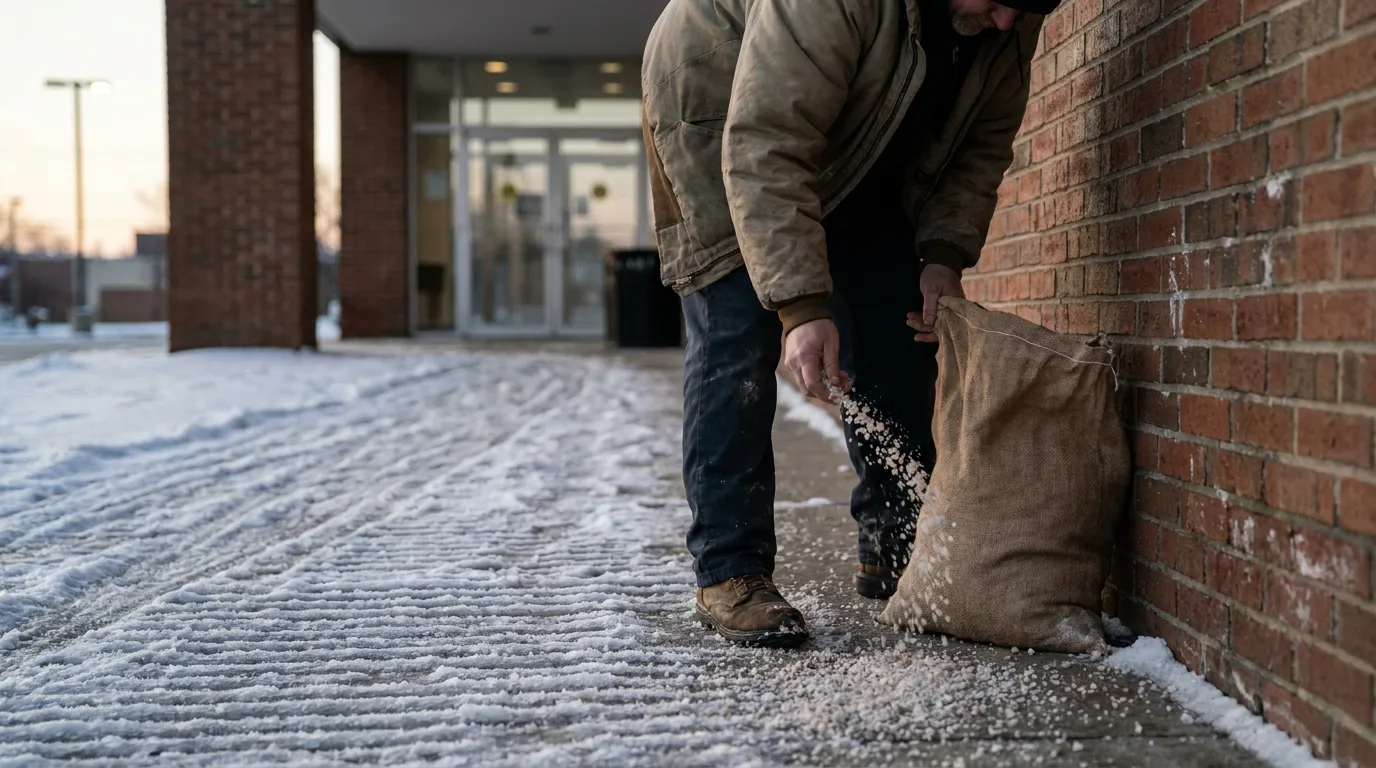
Where the Hills and Ridges Doctrine Pennsylvania Courts Apply Came From
The doctrine developed through a series of Pennsylvania Supreme Court decisions. Key precedents including Rinaldi v. Levine, 176 A.2d 623 (Pa. 1962) and Tolbert v. Gillette, 438 Pa. 63 (1970) are among the rulings that shaped how the Commonwealth’s courts analyze liability for winter conditions. Later opinions reinforced the same idea: general slipperiness from natural snowfall usually does not create liability alone.
The rule reflects a practical judgment about Pennsylvania weather. Courts recognize natural accumulations as an ordinary seasonal hazard, and requiring landowners to keep every surface bare during generally icy conditions would be unworkable. Liability generally attaches when the accumulation becomes something more than a natural, uniform coating, a distinctly hazardous ridge or elevation obstructing safe passage.
Because these rulings come from Pennsylvania’s highest court, they are generally binding statewide. The same analysis generally governs a fall outside a Main Street storefront in Norristown, an apartment complex in Bridgeport, or a shopping center in King of Prussia. Montgomery County judges apply the doctrine as controlling law, and appellate courts continue refining how premises liability principles apply as new cases arise.
What a Plaintiff Generally Must Prove
Where the doctrine applies, Pennsylvania courts typically look for three showings before allowing a case to reach a jury. These elements are fact-intensive and often depend on photographs, weather records, and witness accounts. Evidence gathered in the first days after the fall can significantly influence whether the claim survives summary judgment.
- Ridges or elevations: The snow or ice had accumulated in ridges, mounds, or uneven elevations that unreasonably obstructed travel, rather than forming a smooth, generally slippery surface.
- Notice: The property owner or occupier had actual or constructive notice of the dangerous condition and a reasonable opportunity to address it.
- Causation and damages: That specific condition caused the fall, and the fall produced measurable harm such as medical expenses, lost wages, or lasting physical limitations.
The notice element deserves particular attention. Whether an owner should have discovered a hazard often turns on how long it existed and how visible it was, which is why understanding constructive notice in slip and fall cases matters so much in winter claims.
💡 Pro Tip: Photograph the accumulation from multiple angles the same day, including a shot with a shoe, coin, or ruler for scale. Ridge height is frequently disputed months later, and contemporaneous images can be hard for an insurer to explain away.
When the Doctrine May Not Apply at All
One of the most important points for injured people to understand is that this defense has recognized limits. The doctrine generally addresses entirely natural accumulations arising during generally slippery winter conditions. Courts have declined to apply it in several recurring situations, though the outcome always depends on specific facts and evidence.
Unnatural Accumulations
When ice forms because of something the property owner did or failed to do, the doctrine often gives way. Common examples include water from a broken downspout, runoff from an improperly graded lot, a leaking pipe, or a plowed snow pile that melts and refreezes across a walkway. Here, the hazard may be treated as owner-created rather than purely natural, and the claim is generally analyzed under ordinary negligence principles.
Localized Ice Rather Than Generally Icy Conditions
The doctrine typically presupposes generally slippery conditions exist community-wide. If sidewalks around a Norristown property were clear and dry while a single patch of ice sat in one shaded entryway, a court may find the doctrine inapplicable and analyze the claim under ordinary premises liability principles. Weather station data from the day of the incident frequently becomes central to this question.
Storms That Have Long Since Ended
Property owners generally receive a reasonable period after precipitation stops to clear walkways, but that period is not indefinite. What counts as reasonable depends on weather severity, property type, and foreseeable traffic. A commercial entrance used by hundreds of customers may be evaluated differently from a rarely used side path.
| Scenario | Doctrine Likely Central? | Key Evidence |
|---|---|---|
| Fall during an active snowstorm | Yes | Hourly weather records, timing of fall |
| Fall on refrozen downspout runoff | Often no | Photos of drainage, maintenance history |
| Isolated ice patch on otherwise dry lot | Often no | Regional weather data, witness accounts |
| Fall days after storm ended | Depends | Snow removal logs, prior complaints |
Practical Steps After a Winter Slip and Fall in PA
What you do in the hours and days after the fall can shape the case more than any legal argument. Snow melts, ridges disappear, and surveillance video is frequently overwritten within weeks. Preserving proof early may give your claim the foundation the doctrine’s requirements demand.
Report the fall in writing to the property owner, manager, or landlord and request a copy of any incident report. Seek medical attention promptly, because gaps in treatment are routinely used by insurers to challenge causation. Ask a companion to note anyone who saw the fall or the walkway’s condition, and keep the footwear you were wearing.
Be cautious in early conversations with insurance adjusters. Recorded statements taken before you understand the applicable standard can produce answers later used to argue the ice was uniformly slippery rather than ridged. Reviewing the facts with a firm handling premises liability Norristown claims before giving a statement is generally the safer course.
💡 Pro Tip: Send a written preservation request for video footage as soon as possible. Many businesses retain recordings for only a short cycle, and once footage is gone, reconstructing the surface condition can become substantially harder.
Deadlines That Can End a Claim Before It Starts
Pennsylvania’s general statute of limitations for most personal injury actions is two years from the date of injury under 42 Pa.C.S. § 5524. Missing that deadline typically bars the claim regardless of the strength of the underlying facts. Narrow exceptions exist, including tolling for minors and, in limited circumstances, the discovery rule, but courts generally interpret these narrowly.
Claims against government entities generally follow a shorter track. If the fall occurred on property owned by a municipality, school district, or other local agency, written notice generally must be given within six months under 42 Pa.C.S. § 5522, in addition to meeting the underlying limitations period. Courts may excuse late or defective notice in limited circumstances, but relying on that possibility is risky. Governmental and sovereign immunity statutes also limit when and to what extent a public entity can be sued, so these claims warrant prompt review.
Pennsylvania also applies modified comparative negligence under 42 Pa.C.S. § 7102. Recovery may be reduced in proportion to an injured person’s own fault, and is generally barred if that share exceeds the combined fault of the defendants. Insurers frequently raise footwear choice, distraction, or use of an alternate route in winter cases.
Frequently Asked Questions
1. Does the hills and ridges doctrine Pennsylvania courts follow apply to every icy fall?
Not necessarily. It generally applies where generally slippery conditions exist community-wide from an entirely natural accumulation. Where ice results from a defective gutter, poor drainage, or an owner’s own snow piling, courts often apply standard negligence principles instead.
2. How high does the ice have to be to count as a ridge?
Pennsylvania case law sets no fixed measurement. Courts may consider whether the accumulation was uneven, mounded, or otherwise obstructed travel in a way a smooth glaze would not. This is typically a factual question, which is why photographs and measurements matter.
3. Can I recover if I was partly at fault for my own icy sidewalk injury in PA?
Possibly. Under Pennsylvania’s modified comparative negligence rule, damages may be reduced by your percentage of fault, and recovery is generally barred if your fault exceeds that of the defendants. The allocation depends heavily on the facts.
4. What if I fell on a public sidewalk in Norristown rather than private property?
In Pennsylvania, the abutting property owner often bears primary responsibility for maintaining the sidewalk, though a municipality may also have responsibility depending on local ordinances and the nature of the defect. Claims involving a government entity generally carry shorter notice requirements and immunity limits, so prompt review is important.
5. Do I have a case if the storm was still ongoing when I fell?
It may be more difficult. Pennsylvania law generally allows owners a reasonable time after precipitation stops to clear walkways. Evidence of a preexisting ridge from an earlier storm, or of an unnatural accumulation, may still support a claim.
Understanding Your Position Before the Snow Melts
The hills and ridges doctrine can set a real hurdle for winter slip and fall claims in Pennsylvania, but it is a hurdle with well-recognized limits. Whether it controls your case depends on where the ice came from, what the weather was doing across the region, how long the condition existed, and what evidence still exists. Because snow and ice liability questions are so fact-dependent, a general rule alone rarely predicts how a Montgomery County slip and fall claim will be resolved. Outcomes vary based on the circumstances of each individual case.
If a fall on snow or ice left you facing medical bills and lost income, the attorneys at Solomon, Berschler, Campbell & Thomas – Norristown Lawyers are available to review the details while the evidence is still fresh. Reach a Norristown injury lawyer at 610-279-4300 or schedule a consultation today.
Disclaimer: This content is for informational purposes only and is not legal advice. Every case is unique, and results may vary. Consult an attorney about your specific circumstances.