
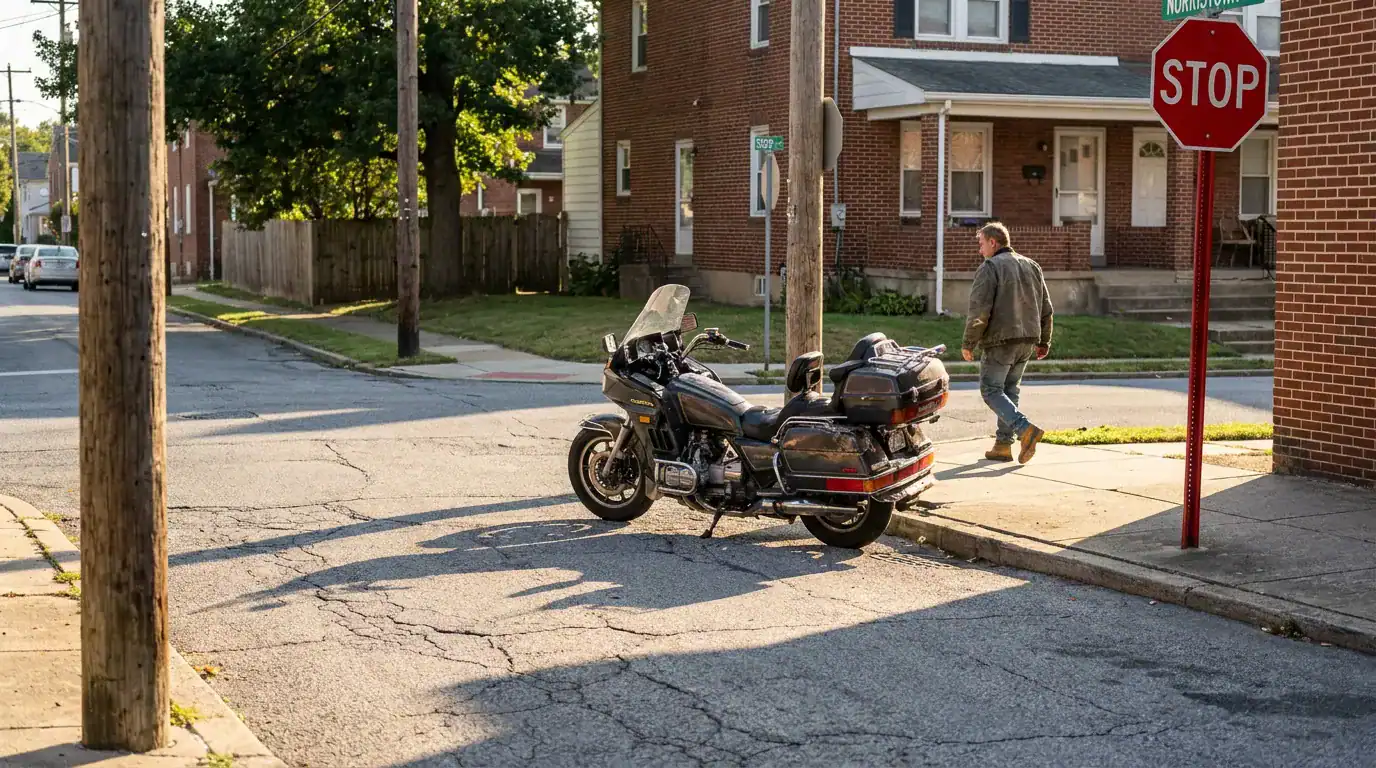
Understanding Your Rights After a Left-Turn Motorcycle Collision in Norristown
Key Takeaways: A Norristown rider can often recover damages after a left-turn motorcycle crash because Pennsylvania’s modified comparative negligence system allows recovery when the rider’s fault is not greater than the defendant’s, though awards are reduced by the rider’s assigned percentage. In most left-turn collisions, the turning driver bears the heavier duty of care and is frequently negligent for failing to yield or misjudging an oncoming motorcycle’s speed. Fault is generally a jury question rather than a court decision, protecting riders from automatic blame. Recoverable damages include medical bills, lost wages, pain and suffering, and motorcycle repair, and liability can extend to additional parties. Injured riders must file within Pennsylvania’s two-year statute of limitations, so prompt action is essential.
Yes, a Norristown rider can often recover damages after a left-turn motorcycle crash, even when shared fault questions arise. Pennsylvania’s modified comparative negligence system means being partly at fault doesn’t automatically end your claim. In most left-turn collisions, a driver misjudges an oncoming motorcycle’s speed or fails to yield, and the injured rider retains a strong right to pursue compensation for medical bills, lost wages, and pain.
If you were injured, the team at Solomon, Berschler, Campbell & Thomas – Norristown Lawyers is ready to help. You can contact our team now or call 610-279-4300 to discuss your situation. Early guidance can make a meaningful difference.
How Motorcycle Accident Left Turn Liability Pennsylvania Rules Work
Left-turn crashes are among the most common and dangerous collisions motorcyclists face on Montgomery County roads. When a driver turns left across an intersection or into a driveway, they must yield to oncoming traffic close enough to present a hazard. A rider lawfully proceeding through an intersection generally has the right of way, placing the burden of caution on the turning motorist.
Pennsylvania courts recognize that a rider who observes traffic properly and proceeds on a green signal may rely on reasonable assumptions. Courts have applied the principle that a driver "had the right to assume traffic from his right would stand still until it was given the green signal." This doctrine supports recovery when another motorist fails to obey a signal or yield. The framework governing motorcycle accident left turn liability Pennsylvania claims rests on these right-of-way principles.
💡 Pro Tip: Photograph the intersection, traffic signals, and skid marks as soon as safe. Signal timing and sightlines often become central issues in left turn crash liability Norristown disputes, and early images preserve evidence that changes quickly.
Why the Turning Driver Usually Bears Responsibility
The turning driver typically carries the heavier duty of care because they cross the path of oncoming traffic. Left turn crashes are a leading cause of serious and fatal motorcycle injuries, a pattern explored in why left-turn crashes injure so many riders. Because motorcycles are smaller and harder to judge for speed, drivers frequently claim they "never saw" the rider, but failing to see a visible motorcycle can itself support a negligence finding.
Pennsylvania’s Shift from Contributory to Comparative Negligence
Pennsylvania once followed a harsh rule that could bar an injured rider from any recovery. The state applied contributory negligence, under which any plaintiff fault, no matter how slight, completely barred recovery. A rider found even one percent responsible could recover nothing.
Everything changed when the Commonwealth adopted comparative negligence. Pennsylvania enacted its Comparative Negligence Act effective September 7, 1976, joining most states in applying comparative principles. You can read a detailed academic treatment of Pennsylvania’s Comparative Negligence Act and the reform’s reasoning. This statute, codified at 42 Pa.C.S. § 7102, dramatically expanded an injured rider’s ability to recover damages.
The 51% Bar Rule Explained
Under the modified comparative negligence system, a rider can recover as long as their fault share is not greater than the defendant’s. The Act provides that contributory negligence "shall not bar a recovery… where such negligence was not greater than the causal negligence of the defendant or defendants against whom recovery is sought." A rider found 50% or less at fault may recover, while a rider found 51% or more generally cannot.
Any recovery is reduced in proportion to your assigned fault share. The statute directs that damages "shall be diminished in proportion to the amount of negligence attributed to the plaintiff." The table below illustrates this reduction.
| Rider’s Fault | Total Damages | General Recovery |
|---|---|---|
| 0% | $100,000 | $100,000 |
| 20% | $100,000 | $80,000 |
| 50% | $100,000 | $50,000 |
| 51% | $100,000 | Barred |
💡 Pro Tip: Avoid admitting fault at the scene or to an adjuster. Comments like "I didn’t see the car" can inflate your assigned percentage and shrink your motorcycle accident compensation Norristown claim.
Proving Fault and Damages in Left-Turn Crashes
Building a strong motorcycle injury claim Pennsylvania case requires connecting the driver’s negligence to your harms. You must generally show the driver owed you a duty, breached it, caused your injuries, and that you suffered actual damages. In left-turn cases, the breach often involves failing to yield, distracted driving, or misjudging your speed. Damages can include medical expenses, lost income, pain and suffering, and motorcycle repair.
An important protection for riders is that fault is usually a jury question, not something a court decides alone. In one Pennsylvania case, the court held that "the question of contributory negligence was solely for the jury and judgment n.o.v. could not be entered on the ground that Topelski was contributorily negligent as a matter of law." This matters when defense teams argue a rider caused their own crash, because those arguments must generally be weighed by a jury. Whether a court may nonetheless decide the issue as a matter of law depends on specific facts.
Pennsylvania courts have a history of allowing injured motorcyclists to recover from negligent motorists. In one intersection collision, a police officer riding a motorcycle recovered a $50,000 jury verdict after a car struck him, upheld on appeal. Decisions like this reflect how riders who follow traffic rules can hold careless drivers accountable.
💡 Pro Tip: Keep a single folder for every bill, wage statement, repair estimate, and medical record. Organized documentation strengthens motorcycle crash settlement PA negotiations.
Deadlines That Can Make or Break Your Claim
An injured Norristown motorcyclist generally must file a personal injury lawsuit within Pennsylvania’s two-year statute of limitations. Under 42 Pa.C.S. § 5524, that period typically begins on the accident date, though the discovery rule can sometimes delay that start. For example, a crash on March 3, 2024 would generally carry a March 3, 2026 filing deadline. Missing this deadline can forfeit your right to recover damages entirely.
Certain limited exceptions may extend the deadline, but courts interpret them narrowly. These don’t apply automatically. Some circumstances that may affect the timeline include:
- Injured minors, who generally may have until two years after their 18th birthday to file.
- Situations where the at-fault party leaves Pennsylvania for more than four months, which may toll the period.
- Cases where the responsible party uses a false identity to conceal their presence.
For fatal left-turn crashes, families pursuing wrongful death claims generally have two years from the death date. This deadline is separate from the accident-based deadline and may fall on a different date if death occurs later. Because judges rarely make exceptions without serious reasons, prompt action matters.
💡 Pro Tip: Contact a lawyer well before the two-year mark. Building a claim, gathering evidence, and negotiating take time, and waiting until the deadline nears limits your options.
When More Than One Party Shares the Blame
Liability in a motorcycle crash can extend beyond the driver who hit you. Evidence such as defective brakes on a recently sold vehicle can support negligence claims against additional parties, including a used-car seller. In one case, a driver stated, "I went to pull the emergency brake and there was no brake there… I pushed the foot brake to the floor but it would not hold," which was relevant to the seller’s alleged negligence.
When multiple defendants share fault, Pennsylvania allocates responsibility in proportion to each party’s causal negligence. Under the Fair Share Act, enacted in 2011 and codified at 42 Pa.C.S. § 7102, each defendant is generally liable only for its proportionate share rather than the entire award. An exception applies when a defendant is found 60% or more at fault, making that defendant jointly and severally liable for the full amount. If you want to understand your options, our team’s overview of recovering compensation after a motorcycle crash explains how these claims proceed.
Frequently Asked Questions
-
Can I recover if I was partly at fault for the left-turn crash?
In many cases, yes. Pennsylvania’s modified comparative negligence rule allows recovery as long as your fault share is not greater than the defendant’s, though your award is reduced by your percentage of responsibility.
-
How long do I have to file a motorcycle accident claim in Norristown?
Generally two years from the accident date under 42 Pa.C.S. § 5524. Limited exceptions may apply, but courts interpret them narrowly, so acting promptly is important.
-
Who decides whether I was negligent?
Fault is usually a jury question. Pennsylvania courts have held contributory negligence is generally a jury matter rather than a court decision, though clear cases can still be decided by the court.
-
What damages can an injured motorcyclist pursue?
Recoverable damages may include medical expenses, lost wages, pain and suffering, and motorcycle repair. The specific amount depends on the facts, injury severity, and fault assigned to each party.
-
Can I sue more than one party after my crash?
Under certain circumstances, yes. If a defective vehicle part, third party, or another driver contributed to the collision, multiple defendants may share liability in proportion to their causal negligence.
Protecting Your Recovery After a Norristown Left-Turn Crash
A left-turn motorcycle crash doesn’t have to end your ability to recover, even when the insurance company points a finger at you. Pennsylvania’s comparative negligence framework allows injured riders to pursue compensation when their fault is not greater than the defendant’s, and the law places meaningful protections in the jury’s hands. By acting within applicable deadlines, documenting your losses, and identifying every responsible party, you position yourself to seek full damages. Every case turns on its own facts, so individualized guidance is essential.
If you are an injured motorcyclist in Norristown, the attorneys at Solomon, Berschler, Campbell & Thomas are prepared to evaluate your left-turn crash and advocate for your recovery. Call 610-279-4300 or reach out through our contact page to discuss your claim and protect your rights.