

The Legal Meaning Behind Two Words That Can Decide a Dram Shop Case
Key Takeaways: Under Pennsylvania law, "visibly intoxicated" generally means a person displayed outward, observable signs of intoxication, such as slurred speech, unsteady gait, or erratic behavior, at the moment alcohol was served, rather than simply a high blood alcohol reading measured later. Serving a visibly intoxicated person is prohibited by 47 P.S. § 4-493(1), and 47 P.S. § 4-497 limits a licensee’s civil exposure to situations in which the customer was served while visibly intoxicated, so Pennsylvania courts have generally tied the standard to the patron’s observable condition at the time of service. Because BAC alone rarely settles the question, proof often depends on surveillance video, point-of-sale and tab records, staff training documentation, and witness testimony gathered quickly before evidence disappears. Licensed bars, restaurants, and clubs and their employees may be held responsible, while social hosts are generally not liable for serving adults unless a minor was served. Pennsylvania’s two-year statute of limitations under 42 Pa. C.S. § 5524 and the modified comparative fault rule under 42 Pa. C.S. § 7102, which generally bars recovery if the plaintiff’s own fault exceeds 50%, may limit or reduce recovery. Every case turns on its own facts, so early investigation and legal guidance are important.
Under Pennsylvania law, "visibly intoxicated" generally means a person showed outward, observable signs of intoxication at the moment alcohol was served, not a blood alcohol reading, and not a conclusion drawn hours later from a hospital lab report. Pennsylvania’s Liquor Code, at 47 P.S. § 4-493(1), prohibits a licensee from serving alcohol to a person who is visibly intoxicated, and 47 P.S. § 4-497 provides that a licensee is generally not liable for injuries caused by an intoxicated customer unless that customer was served while visibly intoxicated. If a bar in Norristown kept pouring drinks for a patron who was slurring, stumbling, and belligerent, and that patron then caused a crash, the visible intoxication element may become the heart of the case.
If you or a family member was hurt by a drunk driver in Montgomery County, the team at Solomon, Berschler, Campbell & Thomas – Norristown Lawyers can review whether a dram shop claim exists alongside your claim against the driver. Call 610-279-4300 or contact us now to discuss your situation.
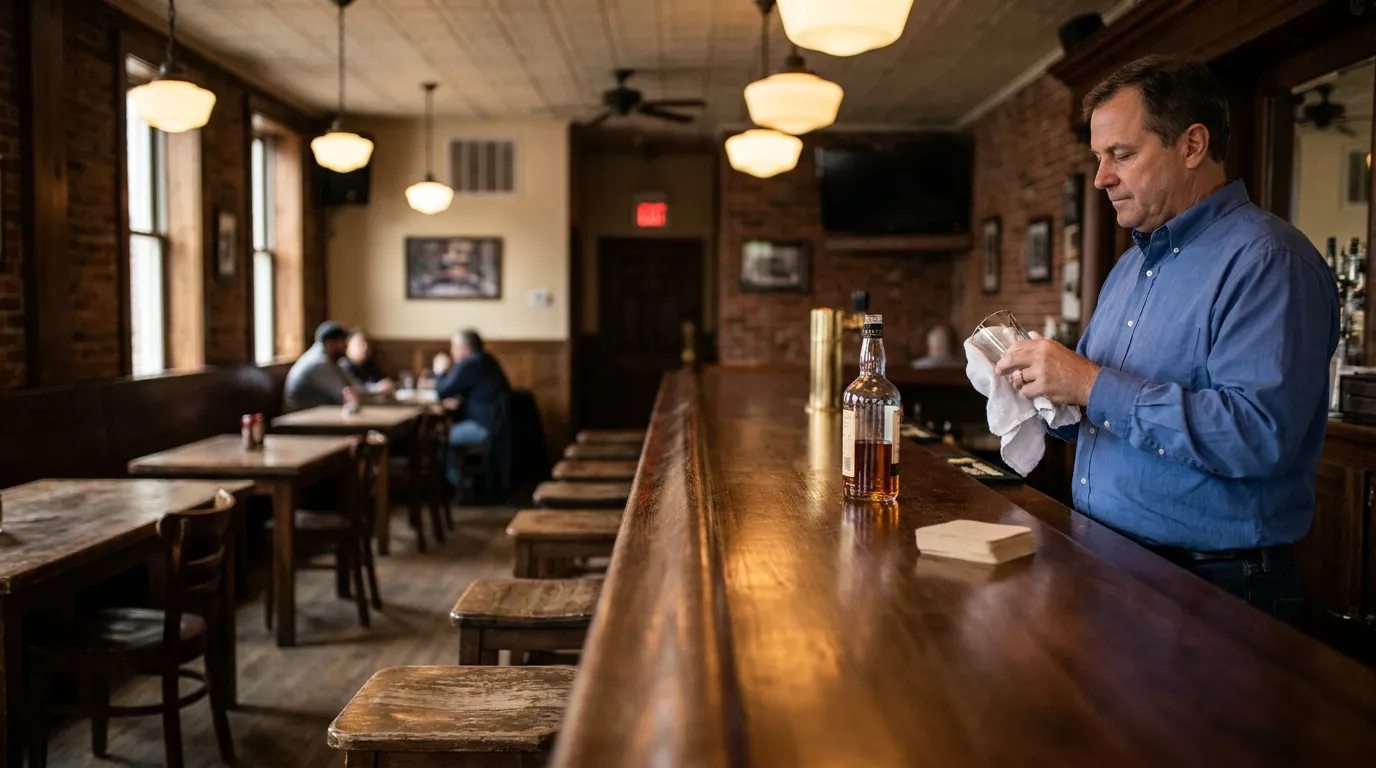
Where the Pennsylvania Dram Shop Visibly Intoxicated Standard Comes From
Pennsylvania’s approach to server liability is generally statutory rather than a general common law duty. In Klein v. Raysinger, the Pennsylvania Supreme Court declined to recognize common law negligence liability for a social host who serves alcohol to an adult guest, reasoning primarily that it is the consumption of alcohol — not the furnishing of it — that is the proximate cause of any subsequent injury, and that only licensed persons engaged in the sale of intoxicants had been held civilly liable under existing Pennsylvania law. A companion decision the same year addressed furnishing alcohol to a minor. That framework still shapes how these cases are generally pleaded today.
Later appellate decisions refined how the element may be proven. Pennsylvania Superior Court decisions, including the 1992 decision reported at 419 Pa. Super. 541, have addressed what evidence can support a finding that a patron appeared intoxicated at the time of service. Federal courts applying Pennsylvania law, such as the decision reported at 663 F. Supp. 1077, have analyzed the same standard and may offer persuasive, though not binding, guidance.
Timing can matter as much as intoxication itself. A plaintiff generally must connect observable impairment to the specific moment of service, not simply establish that the driver was drunk when the collision happened.
What Visible Intoxication Actually Looks Like
Clinical descriptions of acute alcohol intoxication often line up with what courts and servers are asked to notice. Medical literature describing the clinical signs of alcohol intoxication identifies slurred speech, motor incoordination, unsteady gait, nystagmus, and impaired attention or memory. These are outward manifestations a reasonable server may be expected to perceive, though clinical criteria are not themselves the legal standard.
Commonly cited observable signs include:
- Slurred, loud, or repetitive speech
- Stumbling, swaying, or difficulty walking in a straight line
- Bloodshot, glassy eyes and flushed appearance
- Trouble handling money, glasses, or a phone
- Aggressive, overly familiar, or emotionally erratic behavior
Impairment exists on a spectrum, and not every level is visible. Someone with a BAC near the.08 g/dL threshold used to define impaired driving may not display obvious signs, while another person at the same level may be plainly unsteady. That variability is why intoxication evidence in PA dram shop cases often depends on witnesses rather than numbers alone.
Why Blood Alcohol Content Alone Is Not Enough
A high BAC result can be powerful evidence, but it generally does not automatically establish the element. Pennsylvania case law generally ties licensee liability to the objectively observable state of the patron at the time of service. A toxicology result taken after a crash speaks to the driver’s condition later, so it generally may need to be paired with other proof.
Relation-back testimony can help bridge that gap. Forensic toxicologists may estimate what a person’s BAC likely was earlier in the evening based on drinking history, body weight, and elimination rates. Its admissibility and weight depend heavily on the underlying facts and quality of consumption records.
How Server Training Fits Into the Analysis
Pennsylvania promotes responsible service through a state-recognized training program. The Liquor Control Board’s RAMP certification trains servers, sellers, and managers to identify and refuse service to visibly intoxicated individuals. Certification can matter in Liquor Control Board enforcement proceedings, where it may support reduced penalties, but it is not a defense to a civil dram shop claim.
Training records can cut in more than one direction. If a bar trained staff to spot visible intoxication and served a patron anyway, that training may support an argument that the server should have recognized the signs. Whether such evidence is admissible and how much weight it carries remain fact-dependent questions for the court.
Building Proof of Overserved Patron Liability
Evidence in these cases can disappear quickly, which makes early investigation important. Surveillance video is often overwritten within days or weeks. Point-of-sale records, tabs, and receipts may show how many drinks were served, in what time frame, and by whom.
Witnesses are frequently a valuable source of proof. Other patrons, bouncers, rideshare drivers, and bar staff may recall how a person spoke, walked, or behaved before leaving. Statements taken close in time to the event tend to be more reliable than recollections gathered a year later.
| Type of Evidence | What It May Help Show |
|---|---|
| Surveillance video | Gait, balance, and interactions at the bar |
| POS and tab records | Volume and pace of drinks served |
| Patron and staff testimony | Speech, demeanor, and outward behavior |
| Toxicology and reconstruction | Impairment level and crash causation |
| Training and staffing records | What the establishment knew or should have known |
💡 Pro Tip: Write down the name of every bar, restaurant, or venue the at-fault driver may have visited that night as soon as you learn it. A preservation letter sent early may help stop video from being routinely deleted.
Who May Be Held Responsible After a Norristown Drunk Driving Crash
Liability under the dram shop framework generally extends to licensed establishments and their employees. That can include bars, restaurants, taverns, clubs, hotels, and other Liquor Control Board licensees in Norristown and throughout Montgomery County. In many cases, the claim against the licensee may proceed alongside the primary claim against the intoxicated driver.
Social hosts are treated differently under Pennsylvania law. Pennsylvania courts have generally declined to impose common law liability on a social host who serves alcohol to an adult guest, while recognizing that liability may exist when an adult furnishes alcohol to a person under 21. These distinctions are nuanced and depend on the specific facts.
Bringing in a licensee can matter when the driver’s insurance is inadequate. A serious injury can easily exceed a minimum-limits auto policy, and a commercial liquor liability policy may provide an additional source of recovery, subject to its own terms and limits. Understanding your own coverage matters too, which is one reason many people consult a lawyer before speaking with any insurer.
Deadlines and Practical Limits You Should Understand
Pennsylvania generally applies a two-year statute of limitations to personal injury and wrongful death claims under 42 Pa. C.S. § 5524. Missing that deadline may bar a claim entirely. Because the analysis depends on dates, parties, and the nature of the claim, the applicable period should be confirmed for your particular situation.
Exceptions to filing deadlines exist, but courts generally interpret them narrowly. The discovery rule may apply in limited circumstances and does not operate automatically. Tolling for unemancipated minors under 42 Pa. C.S. § 5533, however, is a broad statutory protection that applies automatically — the two-year clock does not begin until the minor turns 18, giving them until age 20 to file without requiring a special showing. Claims involving governmental entities can also carry separate, and much shorter, notice requirements distinct from the civil statute of limitations.
Comparative fault principles can affect recovery as well. Under Pennsylvania’s modified comparative negligence statute, 42 Pa. C.S. § 7102, a plaintiff’s damages are generally reduced in proportion to their own fault, and recovery is generally barred if their fault exceeds that of the defendants. Outcomes in dram shop litigation are highly fact-specific, and no result can be predicted in advance.
💡 Pro Tip: Avoid posting about the crash or the establishment on social media. Insurers often review public posts, and offhand comments can complicate an otherwise strong claim.
Frequently Asked Questions
1. Does the bartender need to have personally noticed the intoxication?
The standard generally focuses on what was observable, not solely on what a particular server admits noticing. Testimony from other witnesses about the patron’s appearance and conduct may support that finding even if staff deny seeing anything unusual.
2. Can I bring a dram shop claim if the drunk driver was a family member?
Possibly, depending on the facts and who was injured. Passengers and other injured parties may have claims against a licensee under certain circumstances. Whether the intoxicated person’s own claim survives is separate and more complicated, because comparative fault and voluntary intoxication principles may substantially reduce or bar such a claim.
3. How many drinks does it take to establish visible intoxication?
There is generally no fixed number under Pennsylvania law. Tolerance, body size, food consumption, medications, and pace of drinking all may affect how impairment presents. Courts generally evaluate observable signs rather than applying a drink count formula.
4. What if the crash happened after the driver left several bars?
More than one licensee may share responsibility in some cases. Each establishment’s conduct is generally evaluated separately based on the patron’s condition when that establishment served alcohol. Sorting this out typically requires timeline reconstruction using receipts, video, and witness accounts.
5. Is a criminal DUI conviction required before filing a civil claim?
Generally, a conviction is not a prerequisite for a civil dram shop action. The two proceedings involve different standards of proof and different parties. Evidence developed in a criminal case can sometimes support the civil claim, subject to the rules of evidence.
Turning a Legal Standard Into a Real Case
The Pennsylvania dram shop visibly intoxicated standard sounds simple on paper, but proving it can take fast investigation, careful witness work, and a firm grasp of how Pennsylvania appellate courts have applied 47 P.S. §§ 4-493 and 4-497. Blood alcohol numbers may help, yet the decisive evidence is often human: what people saw, heard, and remember about a patron’s behavior before the keys turned in the ignition. Every case rises or falls on its own facts, and no outcome can be guaranteed.
If you were injured in a Norristown drunk driving crash, the attorneys at Solomon, Berschler, Campbell & Thomas – Norristown Lawyers are respected for handling complex liability cases and can evaluate whether a licensee may share responsibility. Learn more about how our Norristown car accident lawyer team approaches these claims, call 610-279-4300, or reach out today for a confidential review.
Disclaimer: This content is for informational purposes only and is not legal advice. Every case is unique, and results may vary. Consult an attorney about your specific circumstances.